

How Much Concrete Do You Need for a Slab, Footing, or Foundation?
October 1, 2026
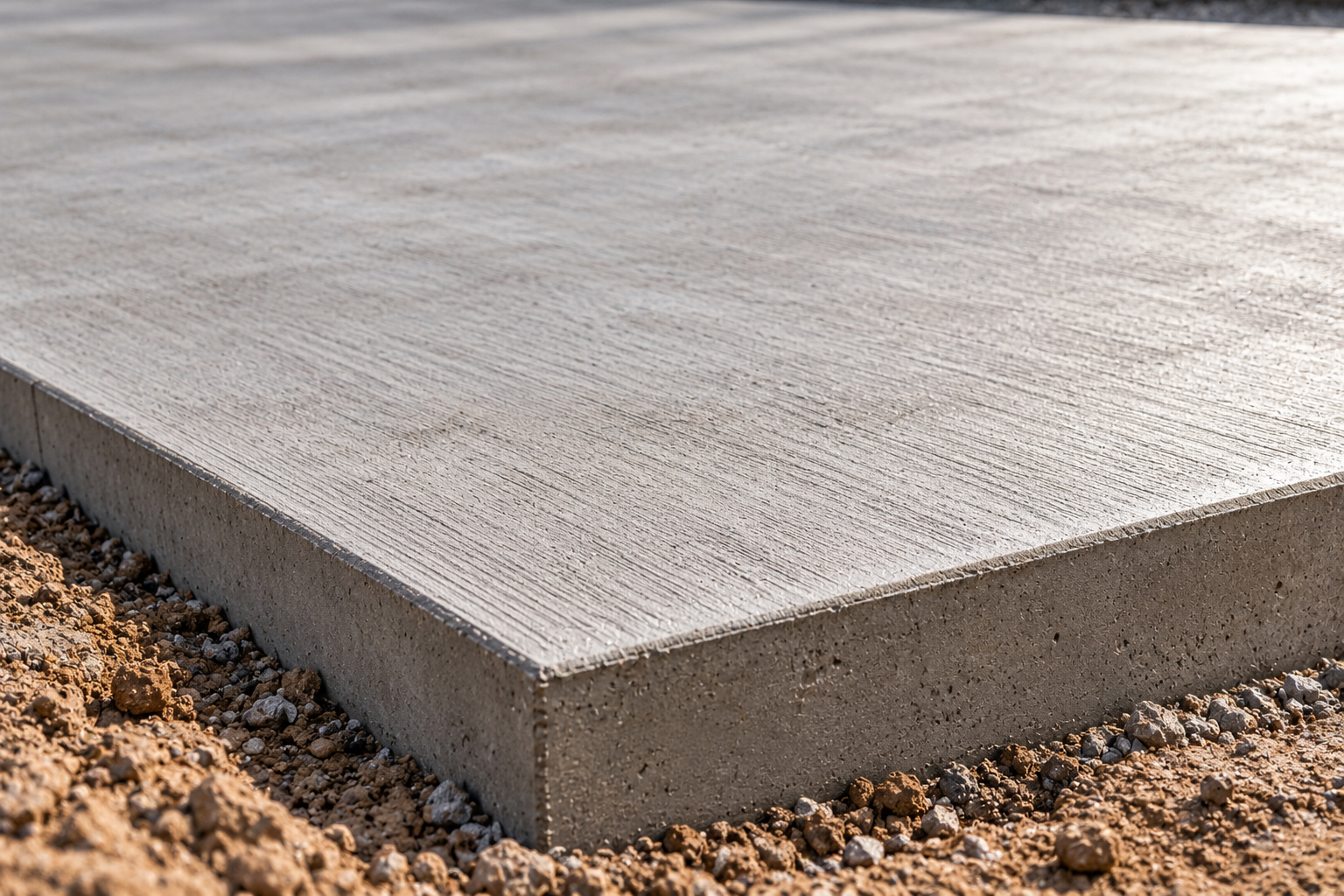
Every ready-mix order comes down to one number: cubic yards. Getting that number right depends on knowing exactly what’s being poured, because a slab, a footing, and a foundation wall each measure differently even when the math behind them looks the same. A few accurate measurements close most of the gap, and a sensible allowance for site conditions covers the rest.
What Determines Concrete Volume?
Concrete volume comes from three measurements: length, width, and depth, each taken in feet. Multiply the three together for cubic feet, then divide by 27 to convert to cubic yards, the unit every ready-mix order is written in. A 4-inch slab measuring 10 feet by 10 feet works out to a little over 1.2 cubic yards once that conversion runs. An online concrete calculator can run this conversion automatically, though the length, width, and depth entered still need to come from an accurate site measurement.
The formula never changes. What changes is where each dimension comes from and how easily a real site can throw one of them off. Depth is usually the culprit, since a quarter inch of variation across a large pour adds up faster than most estimates expect.
How Much Concrete Does a Slab Need?
A slab’s volume comes from one flat calculation: length times width times a single depth. Driveways and patios typically run 4 to 6 inches deep, while a garage floor or a slab built to carry a vehicle lift often calls for a thicker pour.
The bigger risk isn’t the formula, though. An uneven subgrade can turn a supposedly flat 4-inch pour into 5 inches in the low spots, quietly adding volume the original measurement never accounted for. Grade the subgrade before calculating, and check it again before ordering.
How Much Concrete Does a Footing Need?
A continuous footing starts with its total linear length, then factors in the width and depth of the trench. Multiply those three measurements for cubic feet, then convert to cubic yards the same way.
A continuous footing under a foundation wall commonly runs 12 to 24 inches wide and reaches whatever depth frost line and soil-bearing capacity require. Both of those figures move the volume more than the trench length does, so they’re worth confirming rather than assuming.
Trenches also change between excavation and pour. A trench dug during a wet stretch can slump or widen slightly before concrete goes in, which adds volume no one measured.
How Much Concrete Does a Foundation Need?
A foundation wall uses wall length, wall height, and wall thickness to set volume. An 8-inch-thick stem wall standing 4 feet tall takes considerably more concrete per linear foot than a shallow footing, which makes accurate wall dimensions especially important before ordering.
Footings and foundation walls often share a similar structural mix in the 3,500 to 4,000 psi range, since both carry the building’s load down into the soil rather than just supporting foot traffic or vehicle weight.
How Much Extra Should an Order Include?
For most pours, the final order runs roughly 5 to 10 percent above the calculated volume. That margin covers uneven subgrade, form variations, minor spillage, and the ordinary field conditions that make forms hold more than the math predicted.
A few practical checks matter before scheduling delivery. Confirm the calculated yardage against final measurements rather than the first ones, and check the plant’s ordering increments and minimum-load policy, since either can shift the number actually ordered. Set the overage deliberately, favoring closer to 5 percent for clean, well-formed work and closer to 10 percent for rough subgrade or complex forms.
Getting the Order Right
Accurate dimensions come first, then an allowance for the conditions that change how much material the forms hold. Measure the slab, footing, or foundation close to pour day, add a realistic overage, and confirm the final number with the plant a few days out rather than the morning of. Pour timing carries its own considerations, covered in more depth in a guide to cold-weather concrete paving. RiverBend Materials can check a calculated volume against the mix a project actually needs before the order goes in. To lock in the quantity and mix for an upcoming pour, request a quote.