

Preparing Commercial Lots for Summer Traffic: Concrete, Gravel, and Pavement Maintenance Essentials
May 8, 2026
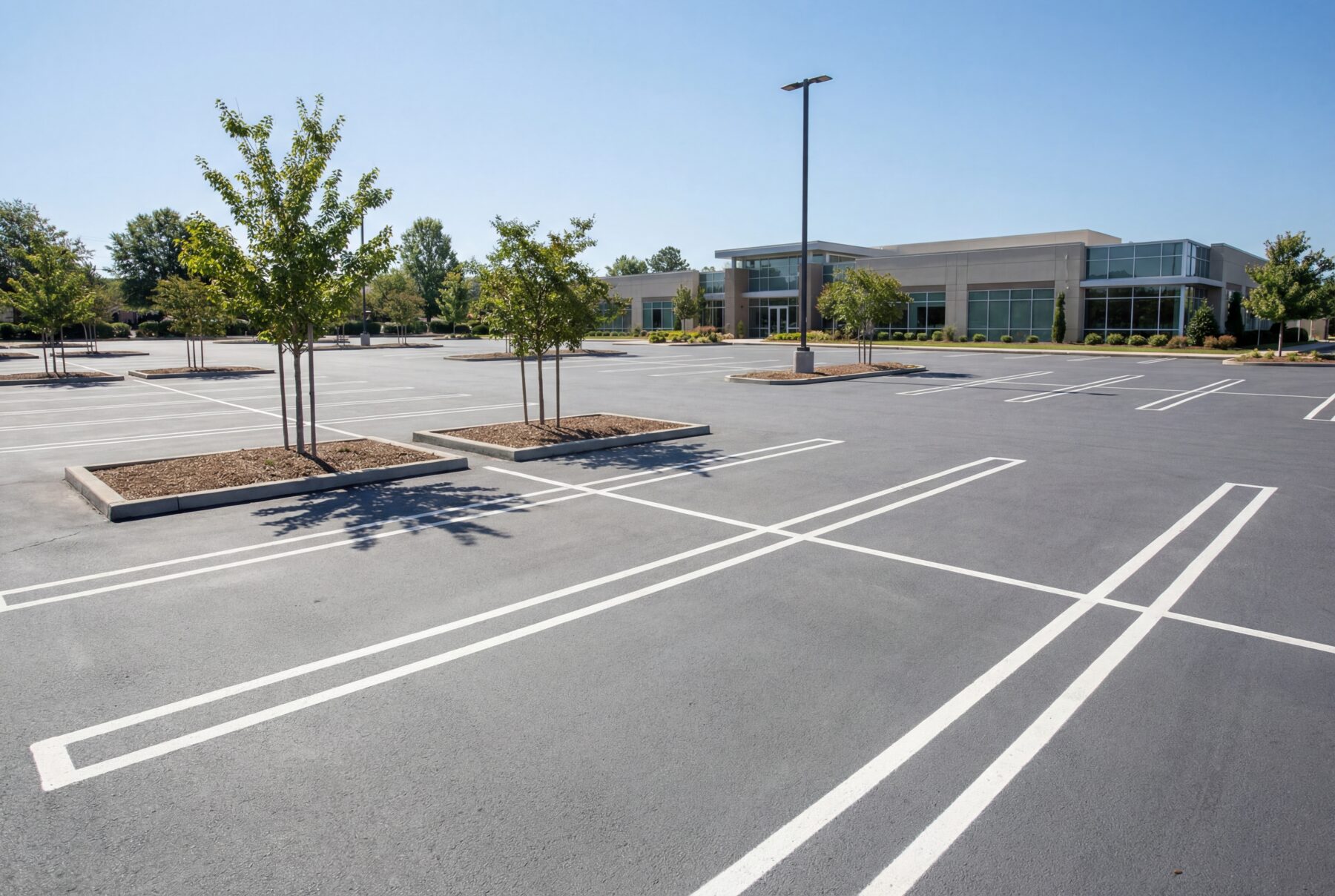
Summer heat and increased vehicle loads are unforgiving on commercial surfaces. Between the thermal expansion that widens existing cracks, the weight cycles from delivery trucks, and the steady pressure of daily foot and vehicle traffic, a lot that survived winter without visible damage can deteriorate rapidly once temperatures climb. Accurate pre-season assessment, paired with materials matched to what the season demands, is what keeps a lot running through the heat rather than breaking down under it.
Reading the Surface Before the Season Starts
Pavement and concrete behave differently as ground temperatures rise, and those differences show up early if conditions are right. Asphalt softens under sustained heat, making it vulnerable to rutting in high-load zones like loading docks, drive-through lanes, and delivery aprons. Concrete holds its form better under heat but responds strongly to joint movement and subsurface moisture changes that accelerate in summer.
A proper pre-season assessment covers more than visible cracking. Drainage patterns, joint conditions, base stability, and surface texture all factor into whether a lot will perform through heavy summer use or begin breaking down under it. Surface distress that looks minor in spring can escalate quickly once traffic volume and thermal stress combine.
Where Ready Mix Concrete Delivers in Maintenance and Repair
Partial depth and full depth concrete repairs on commercial lots depend heavily on mix design, and this is where ready mix concrete carries a real advantage. The mix arrives batched to specification, so water-to-cement ratios stay controlled, aggregate gradation is consistent, and the material is ready to place without field mixing variables that introduce inconsistency into the repair.
For high-traffic repair zones, such as apron sections at entrance drives, loading dock slabs, and curb returns, ready mix concrete carries the internal density and compressive capacity needed to handle repetitive axle loads without early surface distress. The hydration process within a well-proportioned ready mix repair develops a cement paste matrix that bonds tightly through the repair zone, limiting future moisture ingress at the seam and reducing the likelihood of re-cracking at patch edges.
Formwork setup and surface preparation matter as much as the mix itself. Saw-cutting repair boundaries square, removing loose material, and applying the appropriate bonding treatment before placing ready mix concrete are the steps that determine whether a repair integrates with the surrounding slab or separates from it under load cycling.
Gravel and Base Course Work Before Paving Season
Unpaved lots and parking overflow areas that rely on crushed stone or compacted aggregate base need attention before summer traffic peaks. Base course settlement, soft spots from spring thaw, and areas where surface aggregate has migrated under vehicle loads all reduce the bearing capacity of the surface and accelerate deterioration of adjacent paved sections.
Crushed angular aggregate restores surface stability in these areas more effectively than rounded stone because the particle geometry creates mechanical interlock under compaction. Adding material and regrading to restore crown and drainage slope gives summer traffic a stable, well-drained surface that resists rutting and washout. In areas where base failure is deeper, subgrade stabilization before topping with fresh aggregate addresses the root cause rather than just dressing the surface.
Joint Sealing and Crack Repair Ahead of Heat
Concrete lot joints and surface cracks require attention before temperatures peak because heat drives joint movement and moisture behavior simultaneously. Open joints allow surface water to migrate into the base course, softening the support layer and accelerating joint edge spalling under traffic. Properly sealed joints route that water to the surface drainage system instead.
Crack routing and sealing on asphalt should be completed before summer heat cycles begin pushing and pulling the pavement. Hot-applied sealants flow into the routed crack channel and bond to the crack faces, creating a flexible barrier that moves with the pavement rather than against it. Attempting this work in peak summer heat introduces application temperature issues that compromise adhesion and sealant performance.
Concrete Flatwork Additions That Prepare Lots for High Use
New concrete flatwork added to commercial lots ahead of the summer season, whether as replacement sections, added drive approaches, or expanded loading areas, should be designed around anticipated traffic loading and drainage patterns rather than minimum placement requirements. Ready mix concrete specified at the right compressive strength, with fiber reinforcement or rebar where load patterns demand it, produces a slab section that handles summer commercial traffic without the surface distress patterns that show up when mix design is treated as secondary to placement speed.
Curing is where many summer concrete placements lose what the mix design built in. High ambient temperatures and low humidity pull moisture from the slab surface faster than hydration can proceed, leading to plastic shrinkage cracking and surface scaling that cuts into the slab’s capacity to hold up through repeated seasonal cycles. Curing compounds, wet burlap, or plastic sheeting applied immediately after finishing protect the surface moisture environment and allow the cement paste to develop the density the mix was designed to achieve.
Pre-Season Work That Holds Through Peak Demand
Joints sealed, base areas stabilized, and fresh concrete placed before peak traffic arrives reduce the reactive repair cycles that compound in cost and disruption once summer months are underway.
Ready mix concrete, properly specified and placed, forms the foundation of lot repairs and additions that hold through commercial use without requiring revisiting mid-season. Mix accuracy at the batch, proper substrate preparation, and disciplined curing are the three steps that compound into a surface capable of handling what summer brings.
Contact RiverBend Materials before the season peaks to lock in mix specifications and confirm delivery scheduling. Supply confirmed in advance keeps project timelines intact when summer demand hits its stride.