

Using River Rock and Sand to Build a Natural Backyard Stream Bed
March 25, 2026
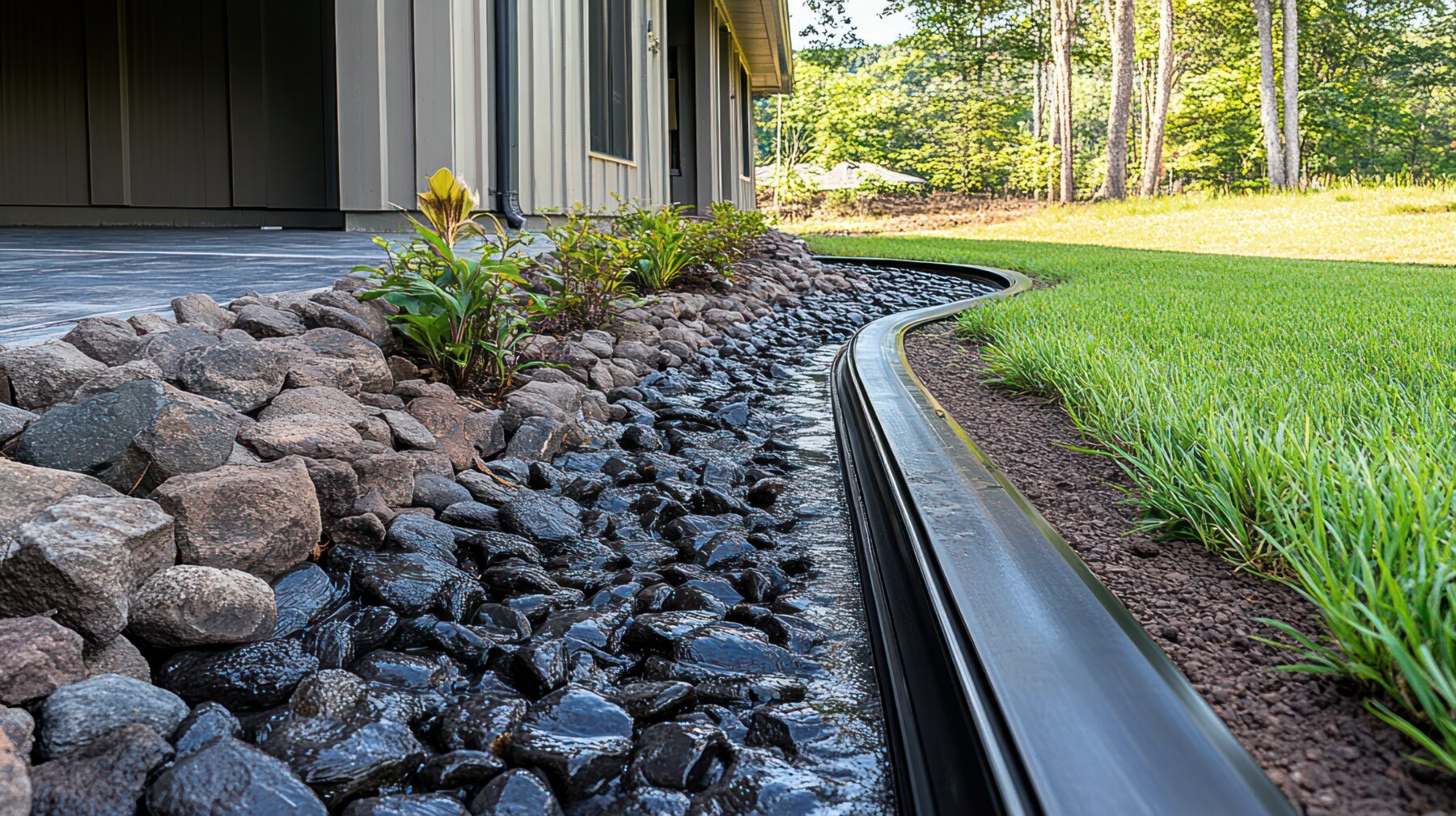
Flowing water applies constant force against soil and stone, cutting channels wherever resistance is weakest. Recreating that effect in a backyard setting requires controlled grading, stable base preparation, and properly sized material layers working together. A functional stream bed depends on how river rock and sand interact beneath moving water, not simply how they appear once installed. When each layer is placed with intent, the channel directs flow while maintaining its shape through rainfall and recirculation cycles.
Planning the Channel for Controlled Flow
Slope governs how water travels through a constructed stream bed. A consistent pitch keeps flow moving steadily without accelerating to the point where fine material begins to migrate. During excavation, shaping the channel with gradual bends and slight elevation changes directs water toward an outlet while reducing concentrated velocity at any single point.
Subgrade preparation determines how well the stream holds form once water is introduced. Firm, compacted soil limits settlement beneath the rock layer and reduces uneven shifting after repeated saturation. In softer ground conditions, adding a compacted base layer beneath the sand increases bearing capacity and stabilizes the entire channel structure.
Building the Base with Sand
Pressure from overlying stone transfers directly into the base layer. A properly placed sand course distributes that load evenly and cushions irregular rock edges so stones seat tightly without excessive void space. Even coverage across the channel floor establishes a consistent bedding layer that supports uniform rock placement.
After spreading, light compaction locks the sand into the shaped subgrade. Matching the sand profile to the channel contours reduces early washout during initial water testing. Once water begins circulating, a compacted sand layer slows infiltration and limits narrow erosion paths that can destabilize surface stone.
Placing River Rock for Stability and Natural Texture
Lateral force increases along curves and outer channel edges where velocity shifts direction. Positioning larger river rock in these areas adds weight and resistance where erosion pressure is highest. Their rounded profiles interlock when layered correctly, forming a surface that resists displacement during heavy rain or active pump flow.
Toward the center of the channel, smaller rock fills transitional gaps and shields exposed sand from direct flow. Staggering stone sizes reduces void space and strengthens internal friction between pieces. Embedding the lower portion of larger stones into the sand base anchors the surface layer and increases overall mass within the channel.
Depth also influences movement. A thin decorative layer shifts more easily under sustained water exposure, while deeper placement distributes hydraulic force across a broader stone profile. Additional embedment improves resistance to rolling and sliding during peak runoff events.
Managing Drainage and Water Clarity
Rainfall and irrigation runoff introduce water beyond the primary design volume. Shallow pooling zones carved slightly deeper into the stream bed provide temporary holding areas that prevent overtopping. Beneath these sections, increasing sand thickness promotes gradual filtration and reduces sediment transport.
Clarity depends on limiting suspended fines within circulating water. When compacted sand remains shielded by well-graded river rock, sediment release decreases during startup and heavy flow. The layered configuration keeps fine particles in place while maintaining steady surface movement.
Integrating the Stream Bed into the Surrounding Landscape
Transition zones between the stream bed and adjacent ground require careful blending. Gradually stepping down stone size toward planting areas reduces abrupt edges and minimizes material migration into turf or mulch beds. Larger accent stones positioned at entry and exit points add mass where flow enters and leaves the channel.
Plant placement should respect water levels and soil saturation patterns. Setting root systems slightly above the rock line limits prolonged exposure to standing moisture while allowing foliage to soften the stone profile. The result is a channel that functions structurally while appearing consistent with its surroundings.
A Stream Bed Built on Material Interaction
Material behavior ultimately determines whether a backyard stream maintains its form. Compacted sand distributes load and moderates moisture movement beneath the surface layer, while river rock resists displacement through weight, embedment, and internal friction. When grading, depth, and interlock are handled with precision, the channel withstands rainfall, pump circulation, and seasonal moisture shifts without reshaping.
Selecting properly screened sand and well-graded river rock supports consistent installation outcomes. With disciplined placement and attention to base preparation, the finished stream bed directs water predictably and retains its structure under repeated exposure.