

What Is Fiber-Reinforced Concrete and When Should You Use It?
November 1, 2026
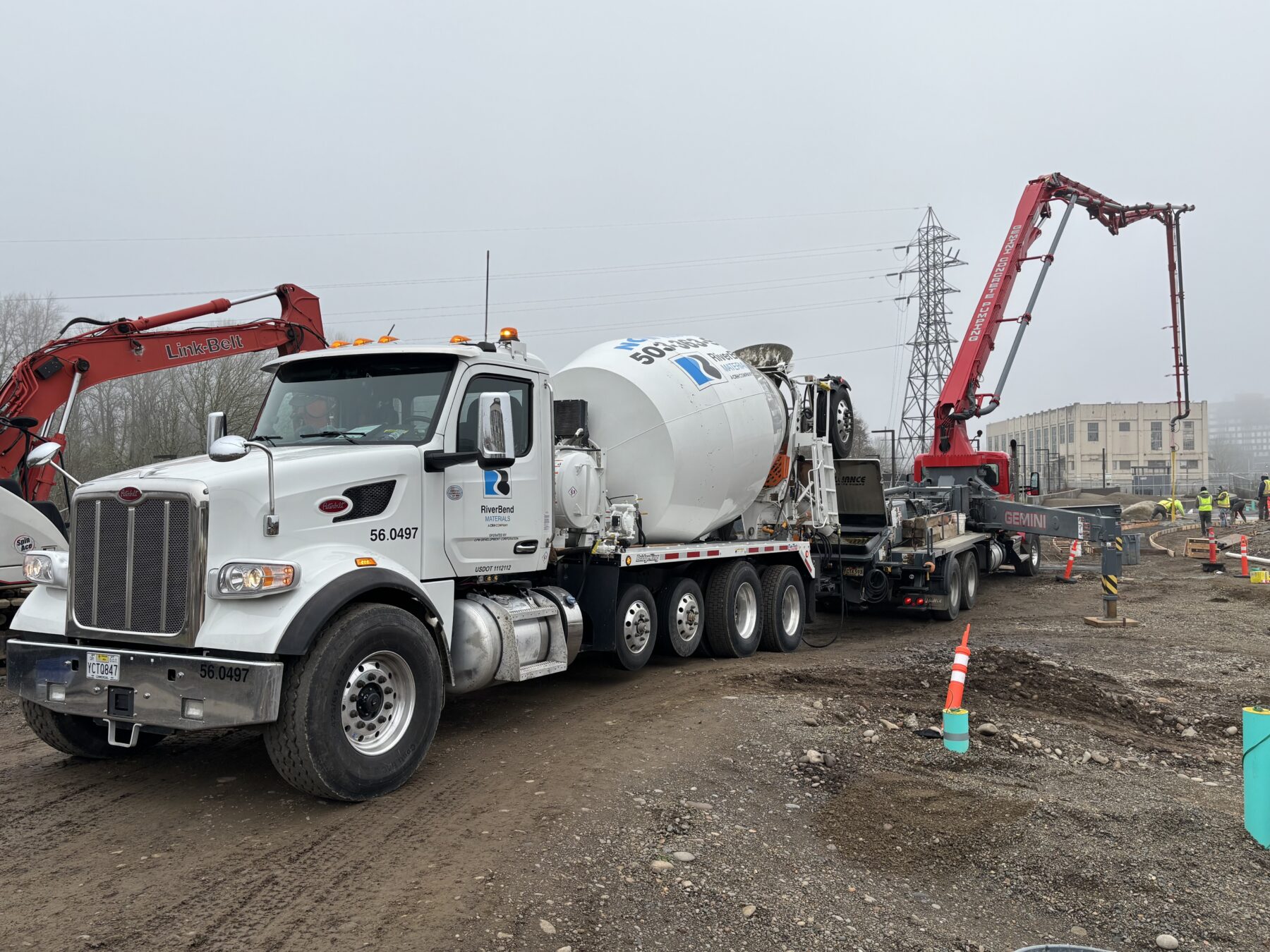
A slab starts changing as soon as it is placed, and one of the first questions is how well it will hold together as it shrinks and cures. Fiber-reinforced concrete addresses that from inside the mix, with short fibers distributed throughout the slab rather than placed at a single depth. Knowing when to use it depends on the slab’s purpose, the demands it will face, and how the concrete will be placed.
What Is Fiber-Reinforced Concrete?
Fiber-reinforced concrete is ready-mix concrete batched with short, discrete fibers, usually polypropylene or another synthetic and sometimes steel, mixed evenly through the cement paste and concrete aggregates. A sheet of wire mesh or a grid of rebar sits at one depth in a slab, while fibers run in every direction through the full thickness. When a crack starts to form, the fibers bridging it hold the two faces together and keep it narrow.
Two families of fiber cover most jobs, and the dose decides which job each one does. Microfibers are fine, hair-like strands added at roughly a pound per cubic yard, and they mainly control the hairline cracking that shows up in the first few hours. Macrofibers are thicker and stiffer, typically added at around 3 pounds per yard or more, and they keep carrying load after the concrete cracks, which is what lets them stand in for welded wire mesh.
Fiber for Summer Flatwork
Early hairline cracking is the most common reason fiber-reinforced concrete shows up on summer flatwork such as driveways, patios, and sidewalks. Plastic shrinkage cracks form when the top of a fresh slab dries faster than bleed water can rise to replace it, leaving short, shallow cracks across the surface before the finishing crew has packed up. Microfibers spread through that top layer resist the early pulling and keep those cracks from opening.
Summers in the area bring long stretches with almost no rain, warm afternoons, and low humidity, the same conditions that speed surface drying on a fresh pour. For a patio or driveway placed between July and September, adding microfibers to the order costs little per yard and pairs well with an early-morning start and a curing compound applied right after finishing. RiverBend’s look at concrete curing covers how moisture and temperature in those first days shape the finished surface.
Replacing Wire Mesh in Slabs
Macrofibers take crack control a step further, and fiber-reinforced concrete dosed with them can replace welded wire mesh in many slabs on ground, including garage floors, shop and barn floors, and residential driveways. Mesh does its work only when it sits near the middle of the slab, and on a busy pour it often gets stepped down to the bottom of the forms. Fibers arrive already distributed through the whole depth, so their position never depends on chairs or on crews lifting steel during the pour.
Taking mesh off the job also tightens the schedule. With no sheets to cut, lap, and tie, a crew can move from a graded, compacted base straight to placement, and the truck can discharge into the forms without anyone stepping around steel. Control joints still go in at their usual spacing, since fibers hold cracks tight while the slab goes through its normal drying shrinkage.
Heavy-Use and Industrial Floors
Fiber-reinforced concrete for heavy-use floors builds on that same mesh-replacing role with higher doses of steel or heavy macro synthetic fiber. Loading docks, equipment yards, warehouse aisles, and farm buildings that see tractors and feed wagons every day all fall into this group. The fibers resist the chipping and spalling that repeated wheel impacts cause at joint edges, where floors usually show wear first.
Those heavier doses also stiffen the fresh mix, so slump, placement method, and finishing approach get settled with the plant before the first truck is loaded. Floors that will stay exposed or be polished deserve the same early conversation, since fiber type affects how the surface looks after troweling.
Fiber and Rebar Together
Even at its heaviest doses, fiber-reinforced concrete works alongside rebar in structural pours rather than taking its place. Footings, foundation walls, beams, and elevated slabs carry engineered loads that call for primary reinforcement sized by a designer, and building codes treat that steel as a requirement. Fibers still earn a spot in those mixes by keeping shrinkage cracks on exposed faces tight, which narrows the paths water can take toward the steel inside.
Ordering Fiber-Reinforced Ready Mix
Each of these uses traces back to the same choice of fiber type and dose. Microfibers guard summer flatwork during its first few hours, macrofibers carry the crack control that mesh used to handle in slabs on ground, and heavier doses protect floors under daily equipment traffic, with rebar still carrying structural loads wherever a design calls for it. Because fibers go in at the plant, they belong on the order right alongside psi, slump, and volume.
RiverBend Materials batches fiber-reinforced ready-mix concrete at four NRMCA-certified plants, along with self-consolidating and pervious mixes for projects that need them. Sharing the slab’s use, thickness, and planned pour date with a quote request gives the team what it needs to match the fiber and mix to the job.